skip to main |
skip to sidebar
 Real Women Like men, women who play real people are often nominated for an Academy Award in the leading category. Which actress was nominated for playing Eleanor Roosevelt in Sunrise at Campobello (1960)?
Notable No-Shows Joan Crawford may or may not have actually been ill when she stayed home in bed on the night she won her only Oscar as Best Actress for a 1945 film. What was it?
 Turner Classic Movies' annual "31 Days Of Oscar" marathon starts tomorrow morning at 6 a.m. Here's the schedule:
All Times Eastern
The Right Direction
1 Tuesday
6:00 AM Eskimo (1933)
8:00 AM Hide-Out (1934)
9:30 AM Manhattan Melodrama (1934)
11:15 AM Thin Man, The (1934)
 Self-Made Men
1:00 PM Citizen Kane (1941)
3:00 PM Great Dictator, The (1940)
5:15 PM Richard III (1955)
What A Character!
8:00 PM Private Life Of Henry VIII, The (1933)
10:00 PM Man for All Seasons, A (1966)
12:15 AM Anne Of The Thousand Days (1969)
Love At First Sight
2:45 AM Last Summer (1969)
4:30 AM Anthony Adverse (1936)
2 Wednesday
7:00 AM Great Waltz, The (1938)
8:45 AM Little Foxes, The (1941)
11:00 AM Nicholas and Alexandra (1971)
2:15 PM Heart Is A Lonely Hunter, The (1968)
4:30 PM Lonelyhearts (1958)
6:15 PM Moon Is Blue, The (1953)
Most Nominated Actor
8:00 PM Five Easy Pieces (1970)
10:00 PM Terms of Endearment (1983)
12:30 AM Easy Rider (1969)
2:15 AM Last Detail, The (1973)
 Husbands And Wives
4:15 AM Guardsman, The (1931)
3 Thursday
6:00 AM Witness For The Prosecution (1957)
8:00 AM Who's Afraid Of Virginia Woolf? (1966)
Four In One
10:30 AM Guess Who's Coming to Dinner (1967)
12:30 PM Johnny Belinda (1948)
2:30 PM For Whom The Bell Tolls (1943)
5:30 PM Streetcar Named Desire, A (1951)
1929-1930
8:00 PM Love Parade, The (1929)
10:00 PM All Quiet On The Western Front (1930)
12:30 AM Big House, The (1930)
2:00 AM Divorcee, The (1930)
3:30 AM Disraeli (1929)
Kerr Trouble
5:00 AM Edward, My Son (1949)
4 Friday
7:00 AM Separate Tables (1958)
9:00 AM Sundowners, The (1960)
 Like Kissing Your Sister
11:30 AM Champ, The (1931)
1:00 PM Dr. Jekyll And Mr. Hyde (1932)
2:45 PM Lion In Winter, The (1968)
5:15 PM Funny Girl (1968)
An All-Knighter
8:00 PM Heiress, The (1949)
10:00 PM Bridge On The River Kwai, The (1957)
1:00 AM Ryan's Daughter (1970)
4:30 AM Mourning Becomes Electra (1947)
5 Saturday
7:15 AM Othello (1965)
10:15 AM Becket (1964)
The Good Luck Charm
1:00 PM Mr. Deeds Goes to Town (1936)
3:00 PM One Hour With You (1932)
4:30 PM Awful Truth, The (1937)
6:15 PM Father Of The Bride (1950)
Real Men
8:00 PM Stand And Deliver (1988)
10:00 PM Gandhi (1982)
1:30 AM Ali (2001)
4:30 AM Lust For Life (1956)
6 Sunday
7:00 AM Conquest (1937)
9:00 AM Abe Lincoln In Illinois (1940)
11:00 AM Jolson Story, The (1946)
1:15 PM Birdman Of Alcatraz (1962)
3:45 PM Viva Zapata! (1952)
5:45 PM Pride Of The Yankees, The (1942)
 Retired Categories
8:00 PM Sunrise (1927)
10:00 PM Wings (1927)
12:30 AM House on 92nd Street, The (1945)
2:15 AM Viva Villa! (1934)
4:15 AM Damsel In Distress, A (1937)
All Or Nothing
7 Monday
6:00 AM Here Comes the Navy (1934)
7:30 AM Trader Horn (1931)
10:00 AM House of Rothschild, The (1934)
12:00 PM Libeled Lady (1936)
Picture Perfect
1:45 PM Black Swan, The (1942)
3:15 PM Snows Of Kilimanjaro, The (1952)
5:15 PM South Pacific (1958)
 Playing Out The String
8:00 PM Blossoms In The Dust (1941)
10:00 PM Mrs. Miniver (1942)
12:30 AM Madame Curie (1943)
2:45 AM Mrs. Parkington (1944)
5:00 AM Valley Of Decision, The (1945)
The Most Nominations ... Without Winning
8 Tuesday
7:00 AM Shoes of the Fisherman, The (1968)
9:45 AM Seven Brides For Seven Brothers (1954)
11:30 AM 2010 (1984)
1:30 PM Hanging Tree, The (1959)
3:30 PM On the Beach (1959)
5:45 PM Caine Mutiny, The (1954)
 Winners In Both Leading And Supporting Roles
8:00 PM Gaslight (1944)
10:00 PM Kramer vs. Kramer (1979)
12:00 AM Glory (1989)
2:30 AM Sin Of Madelon Claudet, The (1931)
Alien Invasions
4:30 AM Red (1994)
9 Wednesday
6:30 AM Woman In The Dunes (1964)
8:45 AM Battaglia di Algieri, La (1967)
11:00 AM Z (1969)
 The Write Stuff
1:30 PM Ball Of Fire (1941)
3:30 PM Foreign Affair, A (1948)
5:30 PM Fortune Cookie, The (1966)
Memorable Oscar Moments
8:00 PM Come Back, Little Sheba (1952)
10:00 PM Cavalcade (1933)
12:00 AM What Ever Happened to Baby Jane? (1962)
Sweet Music
2:30 AM Some Came Running (1958)
5:00 AM Robin And The 7 Hoods (1964)
10 Thursday
7:15 AM Rich, Young And Pretty (1951)
9:00 AM Because You're Mine (1952)
11:00 AM Tonight and Every Night (1945)
12:45 PM Romance On The High Seas (1948)
2:30 PM Anchors Aweigh (1945)
5:00 PM Star! (1968)
 The Most Decorated Decorator
8:00 PM Annie Get Your Gun (1950)
10:00 PM American in Paris, An (1951)
12:00 AM Too Young To Kiss (1951)
2:00 AM Picture of Dorian Gray, The (1945)
4:00 AM Thousands Cheer (1943)
11 Friday
6:15 AM National Velvet (1944)
8:30 AM Yearling, The (1946)
10:45 AM Random Harvest (1942)
1:00 PM Quo Vadis (1951)
4:00 PM Executive Suite (1954)
5:45 PM Little Women (1949)
Any Regrets?
8:00 PM Graduate, The (1967)
10:00 PM Forrest Gump (1994)
12:30 AM Pretty Woman (1990)
2:45 AM Cat Ballou (1965)
 Brother And Sister Acts
4:30 AM Free Soul, A (1931)
12 Saturday
6:15 AM None but the Lonely Heart (1944)
The Best Of The Best
8:15 AM Dark Victory (1939)
10:00 AM Of Mice and Men (1939)
12:00 PM Ninotchka (1939)
2:00 PM Wuthering Heights (1939)
4:00 PM Stagecoach (1939)
5:45 PM Mr. Smith Goes to Washington (1939)
8:00 PM Wizard Of Oz, The (1939)
10:00 PM Gone With the Wind (1939)
2:00 AM Goodbye, Mr. Chips (1939)
4:00 AM Love Affair (1939)
 They Shoot, He Scores
13 Sunday
6:00 AM Cowboy And The Lady, The (1938)
8:00 AM Keys of the Kingdom, The (1945)
10:30 AM Camelot (1967)
1:45 PM Daddy Long Legs (1955)
4:00 PM Coney Island (1943)
6:00 PM Mother Wore Tights (1947)
It Takes Two
8:00 PM Miracle On 34th Street (1947)
10:00 PM Going My Way (1944)
12:30 AM Here Comes Mr. Jordan (1941)
2:15 AM Story of Louis Pasteur, The (1935)
Oscar Falls In Love
4:00 AM Room With a View, A (1985)
14 Monday
6:00 AM Alice Adams (1935)
8:00 AM Flirtation Walk (1934)
10:00 AM More the Merrier, The (1943)
12:00 PM Talk Of The Town, The (1942)
2:00 PM Bishop's Wife, The (1947)
4:00 PM Philadelphia Story, The (1940)
6:00 PM Goodbye Girl, The (1977)
 All In The Family
8:00 PM Rachel, Rachel (1968)
10:00 PM Casablanca (1942)
12:00 AM Treasure of the Sierra Madre, The (1948)
2:15 AM Victor/Victoria (1982)
French Kisses
4:45 AM Cousin, Cousine (1975)
15 Tuesday
6:30 AM Au Revoir, Les Enfants (1987)
8:15 AM Last Metro, The (1980)
10:30 AM Black Orpheus (1959)
12:30 PM Mon Oncle (1958)
The Most Writing Nominations
2:30 PM Alice (1990)
4:30 PM Radio Days (1987)
6:00 PM Hannah and Her Sisters (1986)
 Oscar Firsts
8:00 PM My Man Godfrey (1936)
10:00 PM Cimarron (1931)
12:15 AM Lilies of the Field (1963)
2:00 AM Kiss of the Spider Woman (1985)
4:15 AM Two Women (1960)
16 Wednesday
6:00 AM Grand Illusion (1937)
8:00 AM Chang (1927)
9:30 AM Lady For A Day (1933)
11:15 AM Life Of Emile Zola, The (1937)
1:15 PM Since You Went Away (1944)
4:15 PM Sounder (1972)
6:15 PM Swing Time (1936)
It's An Honor Just To Be Nominated
8:00 PM My Favorite Year (1982)
10:00 PM Lawrence of Arabia (1962)
2:00 AM Stunt Man, The (1980)
4:15 AM Ruling Class, The (1972)
17 Thursday
7:00 AM Goodbye, Mr. Chips (1969)
 How To Earn An Oscar Nomination?
10:00 AM Never On Sunday (1960)
12:00 PM Butterfield 8 (1960)
2:00 PM Street Angel (1928)
4:00 PM Anna Christie (1930)
5:30 PM Irma La Douce (1963)
Auspicious Debuts
8:00 PM 12 Angry Men (1957)
10:00 PM Chariots Of Fire (1981)
12:15 AM Room at the Top (1959)
2:15 AM American Beauty (1999)
Oscar ♥ New York
4:15 AM Do the Right Thing (1989)
18 Friday
6:30 AM Naked City (1948)
8:15 AM Dead End (1937)
10:00 AM Five Star Final (1931)
11:45 AM On the Town (1949)
1:30 PM It's Always Fair Weather (1955)
3:15 PM My Sister Eileen (1942)
5:00 PM Producers, The (1968)
6:30 PM It Should Happen To You (1954)
 The Most Writing Wins
8:00 PM Hospital, The (1971)
10:00 PM Marty (1955)
12:00 AM Network (1976)
2:15 AM Goddess, The (1958)
The Most Best Actor Nominations
4:15 AM San Francisco (1936)
19 Saturday
6:15 AM Bad Day At Black Rock (1955)
7:45 AM Old Man and the Sea, The (1958)
9:15 AM Inherit The Wind (1960)
11:30 AM Captains Courageous (1937)
The Most Supporting Actor
1:30 PM Come And Get It (1936)
3:30 PM Westerner, The (1940)
5:30 PM Sergeant York (1941)
Clean Sweeps
8:00 PM Gigi (1958)
10:00 PM Lord of the Rings: Return of the King (2003)
1:30 AM Last Emperor, The (1987)
Nominated For Best Director, Not Best Picture
4:15 AM Blow-Up (1966)
20 Sunday
6:15 AM 2001: A Space Odyssey (1968)
9:00 AM Summertime (1955)
11:00 AM Morocco (1930)
12:45 PM In Cold Blood (1967)
3:15 PM Third Man, The (1949)
5:15 PM Inn of the Sixth Happiness, The (1958)
 From Stage To Screen
8:00 PM Born Yesterday (1950)
10:00 PM My Fair Lady (1964)
1:00 AM Auntie Mame (1958)
3:30 AM Hasty Heart, The (1950)
5:30 AM Night Must Fall (1937)
21 Monday
7:30 AM Subject Was Roses, The (1968)
9:30 AM Sweet Bird Of Youth (1962)
12:00 PM Watch On The Rhine (1943)
2:00 PM Magnificent Yankee, The (1950)
3:30 PM Bad Seed, The (1956)
6:00 PM Member of the Wedding, The (1952)
Oscar Onlys
8:00 PM State Fair (1945)
10:00 PM Best Years Of Our Lives, The (1946)
1:00 AM Pygmalion (1938)
2:45 AM Two Arabian Knights (1927)
4:30 AM Midsummer Night's Dream, A (1935)
22 Tuesday
7:00 AM Divine Lady, The (1929)
8:45 AM Limelight (1952)
11:15 AM Day At The Races, A (1937)
1:15 PM Ship of Fools (1965)
3:45 PM Devil and Daniel Webster, The (1941)
5:45 PM Skippy (1931)
7:15 PM Red Balloon,The (1956)
 Two In One
8:00 PM Defiant Ones, The (1958)
10:00 PM Amadeus (1984)
1:00 AM Thelma & Louise (1991)
3:15 AM Giant (1956)
23 Wednesday
6:45 AM Suddenly, Last Summer (1959)
Sound Bites
8:45 AM Too Many Husbands (1940)
10:15 AM Lost Horizon (1937)
12:30 PM You Were Never Lovelier (1942)
2:15 PM Sahara (1943)
4:00 PM Cover Girl (1944)
6:00 PM Song to Remember, A (1945)
Best Picture, But Not Most Academy Awards
8:00 PM All the King's Men (1949)
10:00 PM You Can't Take It With You (1938)
12:15 AM Great Ziegfeld, The (1936)
Most Honored Foreign Director
3:30 AM Amarcord (1973)
24 Thursday
6:00 AM 8 1/2 (1963)
8:30 AM La Strada (1954)
 Awards By Association
10:30 AM Lavender Hill Mob, The (1951)
12:00 PM Great Expectations (1946)
2:00 PM Cromwell (1970)
4:30 PM Doctor Zhivago (1965)
Most Directing Nominations
8:00 PM Dodsworth (1936)
10:00 PM Ben-Hur (1959)
2:00 AM Friendly Persuasion (1956)
4:30 AM Collector, The (1965)
Sister Acts
25 Friday
7:00 AM Suspicion (1941)
9:00 AM To Each His Own (1946)
Rookies Of The Year
11:15 AM Marie Antoinette (1938)
2:00 PM Corn Is Green, The (1945)
4:00 PM Search, The (1948)
6:00 PM Bus Stop (1956)
Five For Four
8:00 PM On The Waterfront (1954)
10:00 PM From Here To Eternity (1953)
12:15 AM Tom Jones (1963)
2:30 AM Bonnie and Clyde (1967)
On Second Thought
4:30 AM Mutiny on the Bounty (1962)
26 Saturday
7:45 AM Ivanhoe (1952)
9:45 AM King Solomon's Mines (1950)
11:45 AM Adventures of Robin Hood, The (1938)
1:45 PM Letter, The (1940)
3:30 PM Maltese Falcon, The (1941)
5:30 PM Fanny (1961)
 The Big Five
8:00 PM It Happened One Night (1934)
10:00 PM One Flew Over The Cuckoo's Nest (1975)
12:30 AM Silence Of The Lambs, The (1991)
Real Women
2:45 AM Frances (1982)
5:15 AM Silkwood (1983)
27 Sunday
8:00 AM Sister Kenny (1946)
10:30 AM I'll Cry Tomorrow (1955)
12:45 PM I Want To Live! (1958)
3:00 PM Sunrise At Campobello (1960)
5:30 PM Joan Of Arc (1948)
Notable No-Shows
8:00 PM Mildred Pierce (1945)
10:00 PM Annie Hall (1977)
12:00 AM Informer, The (1935)
2:00 AM Morning Glory (1933)
 The Lion Roars
3:30 AM Smilin' Through (1932)
5:30 AM Broadway Melody Of 1936 (1935)
28 Monday
7:30 AM David Copperfield (1935)
9:45 AM Tale Of Two Cities, A (1935)
12:00 PM Citadel, The (1938)
2:00 PM Human Comedy, The (1943)
4:00 PM Test Pilot (1938)
6:00 PM Battleground (1949)
Nominations In A Bottle?
8:00 PM Arthur (1981)
10:00 PM Lost Weekend, The (1945)
12:00 AM Days of Wine and Roses (1962)
2:00 AM Under the Volcano (1984)
4:00 AM Dresser, The (1983)
1 Tuesday
6:15 AM Johnny Eager (1942)
8:15 AM Cat On A Hot Tin Roof (1958)
 Two By Four
10:30 AM Star Is Born, A (1937)
12:30 PM Star Is Born, A (1954)
3:30 PM Cyrano De Bergerac (1950)
5:30 PM Cyrano de Bergerac (1990)
Oscar Mosts
8:00 PM Emperor Waltz, The (1948)
10:00 PM All About Eve (1950)
12:30 AM Cabaret (1972)
2:45 AM Somebody Up There Likes Me (1956)
4:45 AM Yesterday, Today and Tomorrow (1963)
The Most Honored Producer
2 Wednesday
6:45 AM Yankee Doodle Dandy (1942)
9:00 AM Jezebel (1938)
11:00 AM All This, and Heaven Too (1940)
1:30 PM Captain Blood (1935)
3:45 PM Kings Row (1942)
6:15 PM Four Daughters (1938)
Gone But Not Forgotten
8:00 PM East Of Eden (1955)
10:00 PM Around The World In 80 Days (1956)
1:30 AM Greystoke: The Legend of Tarzan, Lord of the Apes (1984)
4:00 AM Obsession (1976)
3 Thursday
6:00 AM Great Caruso, The (1951)
8:00 AM Merry Widow, The (1952)
10:00 AM Way We Were, The (1973)
12:30 PM North By Northwest (1959)
3:00 PM Kind Lady (1951)
4:30 PM Strip, The (1951)
6:00 PM Shall We Dance (1937)
 One And Done
8:00 PM Grand Hotel (1932)
10:00 PM Mutiny on the Bounty (1935)
12:30 AM Broadway Melody, The (1929)
Nominated For Playing A Nominee
2:15 AM Star, The (1952)
4:00 AM California Suite (1978)
 Anita is a nice, round 100 today. Well, she would be if she hadn't died at the age of 98. But like Lon Chaney and Douglas Fairbanks, I'm sure she's still out there somewhere.
Tomorrow, I'll be back on the Greta Garbo kick. In the meantime, here's a repost of an essay I wrote about her some time ago, coupled with my favorite pictures of her.
I have to confess, before I started writing this blog, I had never heard of Anita Page, but now that I've seen half a dozen of her movies and read a bit about her, it's clear that she was just as cute as the proverbial bug's ear and no doubt somebody you would have been lucky to know. Certainly Herschel House must have thought so—the Navy pilot was married to her for fifty-four years, until his death in 1991.
 Mostly Page played sweet innocents who found themselves in a melodramatic load of trouble (see, for example, Our Modern Maidens), but her turn in Our Dancing Daughters as a self-absorbed, gold-digging be-yotch who tricks Joan Crawford's millionaire boyfriend into marrying her was unforgettable and should have presaged a longer career. Louis B. Mayer, a warped frustrated old man, saw to it that it didn't.
Well, you take what you can get.
 Our Dancing Daughters was the first movie written specifically for Joan Crawford and it made her a star. It's the story of a rich, wild girl (Crawford) with an addiction to short dresses and the Charleston who loses the love of her life to an even richer, wilder girl (Page, also in a star-making role), all while soaking up Jazz and bootleg booze in fabulous art Deco palaces that could only have existed on the set of an MGM movie. None of this is meant to be taken seriously—just another Hollywood studio clucking its tongue at girls gone wild even as it exploited the phenomenon to rake in box office bucks.
What's not to like?
Although she had only just celebrated her eighteenth birthday when the movie hit the theaters, Page is absolutely convincing in her ruthless pursuit of the man, first putting on an act of virginal innocence to entice him then exploiting him to the hilt after she lands him.
 In the movie's penultimate scene, Page is drunk, evil and standing at the top of a staircase. No prizes for guessing what happens next.
"Our Dancing Daughters was my picture," she said years later. "I say that because I did the acting. Joan Crawford danced her way through it. I acted my way through it."
 Our Dancing Daughters was one of a series of Hollywood movies seeking to both exploit and condemn the Jazz Age flapper phenomenon. The script called for an undercurrent of tension between Page and Crawford and, boy, is there ever. Years later, Page claimed Crawford physically assaulted her on the set but the mutual hatred didn't hurt their on-screen chemistry any. In fact, despite their mutual loathing, Page and Crawford made two more movies together, Our Modern Maidens and Our Blushing Brides, trading the good girl/bad girl roles back and forth, to great commercial, if not artistic, effect.
Page also starred in the year's Oscar winner for best picture, The Broadway Melody, and received over ten thousand fan letters a week, including nearly a hundred from fascist dictator Benito Mussolini who was infatuated with the young actress.
" Are you starting to believe your own pub- licity?" director Harry Beaumont asked Page during the filming of one of their six pictures together.
"Of course," she said, "Aren't you?"
Our Dancing Daughters is one of those odd silent-sound hybrids of the very early sound era. Made not long after The Jazz Singer, the film has a soundtrack, including several prominently featured songs, but no dialogue, only title cards. I actually find this approach preferable to early talkies such as The Broadway Melody where, for example, Anita Page's dialogue competes with the rustling of her own dress.
 Fortunately, sound technology improved rapidly over the course of a year.
MGM's The Broadway Melody, billed as the first "all-talking, all-singing, all-dancing" musical, was the top grossing movie of 1929 as well as the first sound picture to win the Academy Award for best picture, and further cemented sound's commercial future. The Broadway Melody was the top box office movie of 1929 and also featured "You Were Meant For Me" and "Give My Regards To Broadway."
 Douglas Shearer out of necessity invented the concept of the "playback"—pre-recording a song that performers would then dance and lip-synch to—when the choreography on a huge dance number that had already been performed and recorded was deemed unsuitable. Rather than bring the orchestra back to the sound stage, Shearer figured out how to reuse the sound from the previous take, and the cast performed the dance number with its new choreography to a playback of the song. This technique became the industry standard for decades.
 "I thought Our Dancing Daughters was my picture," she said later, "but Broadway Melody was Bessie Love's. I love good English, and I hated saying things like, 'Gee, ain't it elegant?' In my opinion, silents were much better than talkies. One thing you could have was mood music, which you could have playing throughout your scene to inspire you. The trouble with talkies was, they let you have the music, but they'd stop it when you had to talk, and that was always a let-down for me."
After The Broadway Melody, Page made two more movies with Joan Crawford, and appeared in films with Lon Chaney, Buster Keaton and Clark Gable.
 Her final movie for MGM was 1932's Prosperity, starring Marie Dressler and Polly Moran. On the outs with studio head Louis B. Mayer after twice refusing to sleep with him (the second proposition made in the presence of Page's mother), Page served out the remaining years of her MGM contract on loan to poverty row studios, making such low-budget bombs as Jungle Bride and Hitch Hike To Heaven. It was an ignominious end for an actress who just a couple of years before had been second only to Greta Garbo as the studio's top draw.
 Page left Hollywood and married Navy flyer Herschel House in January 1937. After his death, she began to make films again, mostly low-budget fare such as The Crawling Brain and Witchcraft XI. On the 75th anniversary of the founding of the Academy of Motion Picture Arts and Sciences, Page received a standing ovation at a special screening of The Broadway Melody. She was last surviving attendee of the first Oscar ceremony and died in 2008 at the age of ninety-eight.
[To read Part One of this essay, click here; for Part Two, here; and for Part Three, here.]
Beyond The Legend
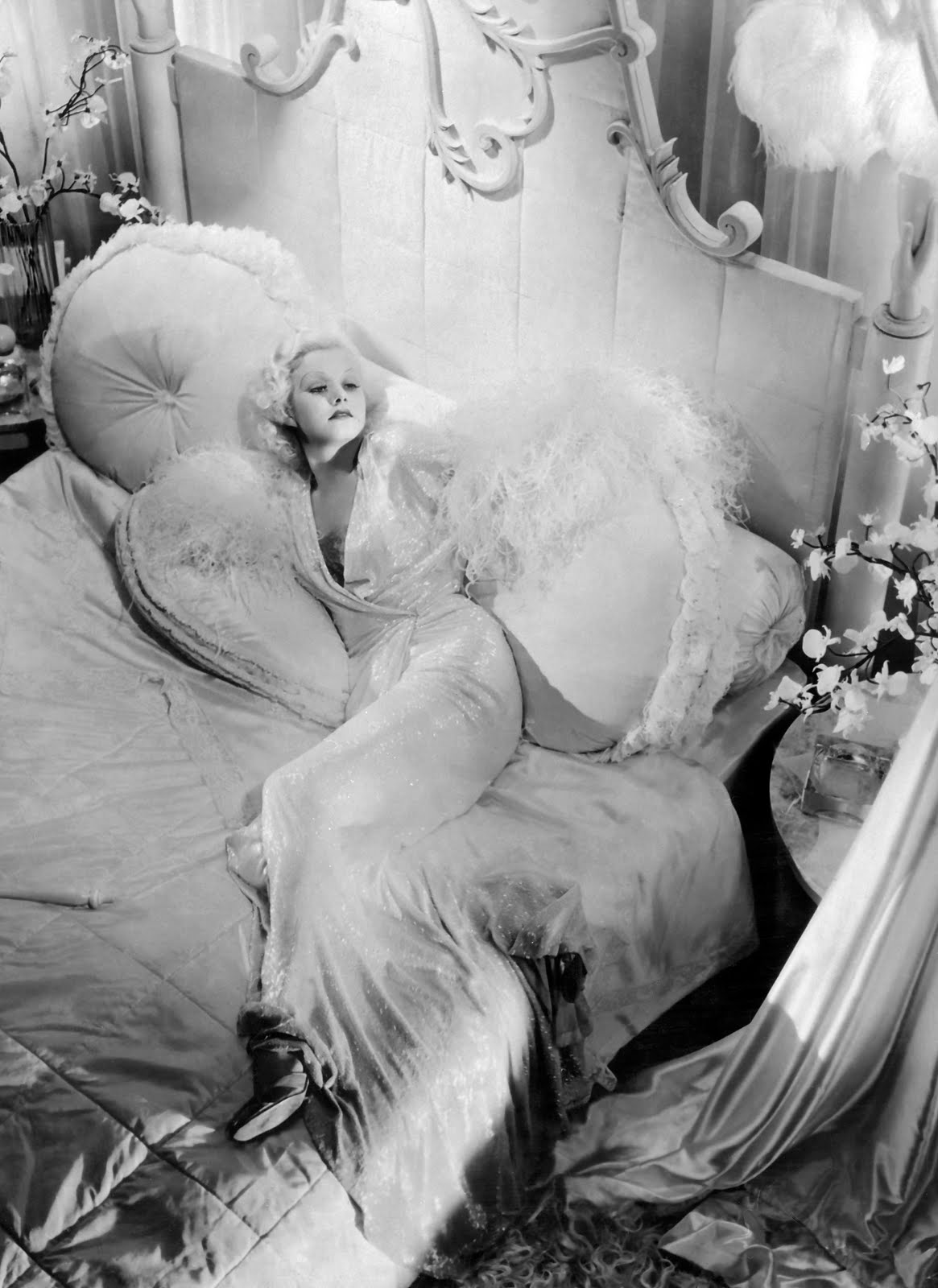
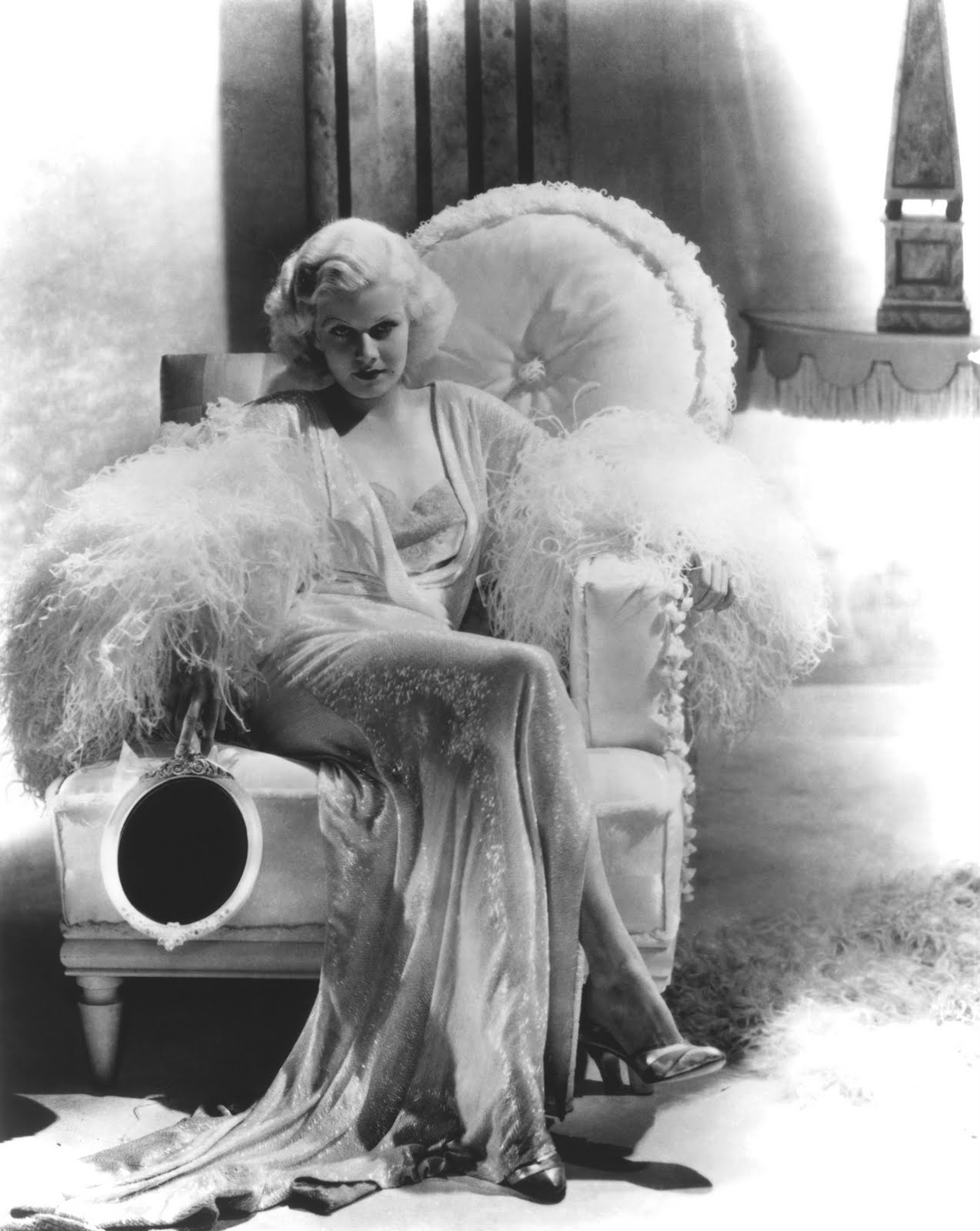
 Perhaps Jean Harlow was always more than just one of the legion of lovelies populating the backlots of Hollywood's studios. On looks alone—those platinum blonde tresses fascinated men and women alike—she had enjoyed box office success with Hell's Angels, The Public Enemy and Platinum Blonde, and frankly, less attractive actresses with even more limited talent than Harlow displayed in those early efforts managed careers that lasted for years. But Harlow didn't rest on her beauty, and worked hard to develop into, arguably, the finest comedic actress of the decade.
"I was not a born actress," she confessed without embarrassment. "No one knows it better than I. If I had any latent talent, I have had to work hard, listen carefully, do things over and over and then over again in order to bring it out."
 She wasn't coy about her looks— you might as well ask the sun to be coy about the dawn— but unlike her con- temp- orary, Mae West, who played the vamp as broadly as a drag queen and reduced sex to a quick, cheap commercial transaction, Harlow acknowledged her appeal with a shrug then moved past it, as if to say, "Of course I like sex—what's that got to do with you and me?" and as a result was much sexier than Mae West ever dreamed of being.
"She has a walk that's a marvel," critic Gerald Weales wrote. "It contains little of the teasing seductiveness that Hollywood sex goddesses are supposed to display. Her sexuality is direct and matter-of-fact: she moves like an athlete."
Cary Grant had the same sort of thing. Yes, he was incredibly handsome, suave, sophisticated; yet he was so secure, he was willing to make a complete fool of himself (think of the scene with the chair in The Awful Truth, if you've been lucky enough to see it) and as a result is all the more handsome for it.
 Same thing with Jean Harlow. She was beautiful but it's her sense of humor and lack of self-importance that you react to. That curvy little body winds up being icing on the cake.
"Harlow was rather like a boy," screenwriter Anita Loos observed. "She had no vanity whatsoever. Things which she did that seemed outrageous, she did because she had no feeling of any kind herself, so she didn't think they affected other people. Also, she had this extraordinary beauty which she'd been born with and had for her whole life, so she wasn't conscious of it. But utterly no vanity. None at all."
 Off screen, she was much like the characters she played—not educated but not dumb either, sharp as a matter of fact; beautiful but not interested in her own beauty; funny and disarmingly down-to-earth, without guile or vanity; and cursed with a disastrous luck in men—with two chief differences: she hadn't scrabbled her way up from the working class, but had in fact been born to the purple in Kansas City's upper class society; and she hated wearing those tight-fitting gowns that designers such as Adrian always sewed her into, preferring sports clothes, loose sweaters and slacks.
"Underwear makes me uncomfortable," she said, "and besides, my parts have to breathe."
 After the critical and commercial successes of Red Dust and Dinner At Eight, Jean Harlow leapt to the top of her profession, surpassing Joan Crawford, Greta Garbo and Norma Shearer as the most popular actress at MGM. And although Hollywood began enforcing the Production Code in 1934 and as a result toned down the more explicit sexuality of her movies, Harlow nevertheless remained an audience favorite. In fact, from 1932 until her untimely death in 1937, Harlow had at least one movie, and often two, finish among the top ten grossing films of the year.
Despite her success with critics and audiences, Harlow was never nominated for an Academy Award—comedic performances rarely are—but she did rank twenty-second on the American Film Institute's list of the top 100 movie legends and forty-ninth on Entertainment Weekly's list of the all-time greatest movie stars.
 In 1935, after the end of her third marriage, Harlow fell in love with William Powell, her co-star in the movie Reckless, and finally after years of turmoil, her personal life began to match the success of her professional one. The two secretly engaged although never married—in his early forties, Powell worried about being linked to such a young actress, and Harlow also claimed MGM studio chief Louis B. Mayer didn't approve of the union.
In 1937, during filming of her sixth movie with Clark Gable, Saratoga, Harlow fell ill with a serious kidney ailment which likely had gone undiagnosed for years and died before the end of production. The studio finished the film with long shots of a stand-in and released the film with much fanfare. It was the highest grossing film of 1937. (Snow White and the Seven Dwarfs, which has been re-released many times, eventually passed Saratoga as the year's top money maker.)
"She was the bravest girl I ever met," said Clark Gable.
[To read Part One of this essay, click here.]
Dinner At Eight: Harlow Arrives At Last
 "I was reading a book the other day."
"Reading a book?!?"
"Yes. It's all about civilization or something. A nutty kind of a book. Do you know that the guy says that machinery is going to take the place of every profession?"
"Oh, my dear, that's something you need never worry about."
 After a second movie with Gable, Hold Your Man (actually their third—Gable and Harlow had small roles in the 1931 gangster movie The Secret Six, but weren't paired together), Harlow gave what may be her best-remembered performance, that of none-too-bright social climber Kitty Packard in the comedy-drama, Dinner At Eight.
A successful play by Broadway legends George S. Kaufman and Edna Ferber, Dinner At Eight is a loosely-connected series of vignettes about a group of Manhattan social climbers preparing for a dinner party as their respective worlds fall down around their ears. Seeing Dinner At Eight as a potential follow-up to 1932's Grand Hotel, a star-studded extravaganza that had won the Academy Award for best picture, MGM producer Irving Thalberg bought the film rights to the play, but fell ill soon after and took a leave of absence from the studio. Louis B. Mayer, long jealous of Thalberg, sensed an opportunity to increase his control of MGM and brought in his son-in-law, David O. Selznick, who reluctantly left his post as head of RKO Studios to head up the production (prompting wags to quip "the son-in-law also rises").
 For Dinner At Eight, Selznick assembled the brightest of MGM's stars, including the three male leads from Grand Hotel, and added America's most popular actress Marie Dressler as a faded Broadway star, Billie Burke as the twittery hostess of this train wreck, and finally Harlow as the spoiled young trophy wife of Wallace Beery's crooked businessman. (Joan Crawford turned down the part of a woman cheating on her fiance, the most thankless role in the movie; it went to Madge Evans instead.)
 Director George Cukor, fresh off Katharine Hepburn's successful debut in A Bill Of Divorcement, cast Harlow over the objections of Louis B. Mayer, who felt she wasn't actress enough to keep up with her more experienced co-stars. But Red Dust had convinced Cukor that Harlow had a gift for comedy and with the director's help, she wound up stealing the show.
Outside of Karl Marx, Dinner At Eight is as scathing an indictment of the monied classes as you're likely to find, and no character is more indolent than Harlow's Kitty. She manipulates her men, bullies her maid, and otherwise lies around in a torpor, eating bonbons and complaining of boredom. "She holds court from her bed," Matthew Kennedy wrote for Bright Lights Film Journal, "like a spoiled Persian cat, a disagreeable chocolate substituting for a furball."
 And yet because she hungers to improve herself (even if she seems to think the surest path to knowledge is to sleep with an educated man), we find ourselves rooting for Kitty. "I'm going to be a lady if it kills me," she vows.
Ironically, the woman Kitty most aspires to be—Billie Burke's Millicent Jordan—is even more empty-headed than she is, and without a backless evening gown to take your mind off the fact.
In terms of its complexity, the role of Kitty Packard was a leap for Harlow, but where she had been ill-equipped to handle early roles in Hell's Angels and Platinum Blonde, now she was ready. In Red-Headed Woman, she'd learned how to gain an audience's sympathy despite playing an unlikeable character. In Red Dust, she'd learned how to deliver dialogue (tough wisecracks, for example) while conveying a deeper truth (hurt, vulnerability) with her eyes.
In Dinner At Eight, she found the last piece of the puzzle, "the ability," in the words of Frank Miller, writing for Turner Classic Movies, "to deliver lines as though she didn't quite know what they meant."
The result was the best performance of her career.
 "Harlow played comedy," said Cukor, "as naturally as a hen lays an egg."
The most famous scene in Dinner At Eight is the last one between Harlow and Marie Dressler—and justly so, with Dressler's famous doubletake and last line—but it's not really Harlow's scene, except to serve up a couple of terrific straight-lines. Instead check out her scenes with Wallace Beery, who plays her boorish husband. The two bicker and battle, the collision of small minds and titanic wills, and despite Beery's expertise at hammy scene stealing, it's Harlow the viewer remembers.
Their verbal sparring ("Remember what I told you last week?" "I don't remember what you told me a minute ago.") escalates to point of physical violence, with Harlow delivering a pivotal ultimatum in one breathless rant:
 "Who do you think you're talking to, that first wife of yours out in Montana? That poor mealy-faced thing with a flat chest that didn't have nerve enough to talk up to you, washing out your greasy overalls and cooking and slaving in some lousy mining shack—no wonder she died. Well, you can't get me that way, you're not going to step on my face to get where you want to go, you big windbag! ... Politics? Ha! You couldn't get into politics. You couldn't get in anywhere. You couldn't even get in the men's room at the Astor!"
It's a tour de force moment both for Harlow and for the film, and it contrasts nicely with Kitty's previous lethargy and coy manipulations. The antipathy between Beery and Harlow was genuine, but they were a great screen couple and they made one more movie together, China Seas in 1935.
 Movie-going audiences loved Dinner At Eight and loved Harlow in it, not only because she looked great in her backless evening gown (designed by Adrian, it was known as the "Jean Harlow dress" and was so tight she couldn't sit down in it), but also because she had proven herself once and for all as one of Hollywood's great comedic actresses.
"Acting honors," said Variety at the time, "probably will go to Dressler and Harlow, the latter giving an astonishingly well-balanced treatment of Kitty, the canny little hussy who hooks a hard-bitten and unscrupulous millionaire and then makes him lay down and roll over."
According to KC at Classic Movies, Dressler was so impressed with Harlow that she hoped she and Harlow could work together again, starting "an entirely new kind of comedy team—the glamour girl and the matron." Dressler, however, died of cancer just a year later and the two never made another movie together.
As it was, when Harlow finished her last scene for the movie, she went to her dressing room and cried, perhaps knowing nothing she ever did afterwards would top this performance.
 As a postscript, I should mention that Harlow's real-life dinner at eight didn't go nearly so well as the onscreen one. At a party for the British prime minister, Harlow found herself seated next to the PM's wife, Margot Asquith, Countess of Oxford and Asquith. Throughout the dinner, Harlow addressed her as "Margot," pronouncing the "t," until finally the Countess said, "No, no, the 't' is silent, as in 'Harlow.'"
Apocryphal, perhaps, but a good punchline.
Note: To read my essay on John Barrymore's performance in Dinner At Eight, click here.
[To read Part Three of this essay, click here.]
 Many actors have laid claim to the title of the Biggest Ham in Hollywood over the years—Wallace Beery, Christopher Walken, William Shatner, Jack Nicholson, even Laurence Olivier when he was bored and phoning it in—but few at their peak were as deliciously hammy as John Barrymore.
Bad ham acting takes no especial skill other than a lack of talent and self-awareness, and bad ham actors, whose numbers would fill a football stadium, take you right out of the action, start you looking for the exits and are either quickly forgotten or wind up making miniseries on the Lifetime Channel. "[A] bad ham actor," writes "Greg" at Cinema Styles, "is a bad actor period, someone who overplays, overemotes and overinflects every move, tear and shout. They're bad, they don't know how to do anything else.
"But a great ham actor is also a great actor who is in possession of so much skill and talent they know when to go over the top and how far to take it."
Great ham acting is an underappreciated art form and great ham actors, so few we can nearly name them all, last for years, energize the mundane, create a giddy sense of the possible. And with Dinner At Eight, John Barrymore put the capstone on a career that featured some of the best ham acting in the history of Hollywood. His Larry Renault—like Barrymore, an alcoholic ham on the downside of his career—was, as TV Guide put it in its 5-star review, "a bitchy casting idea, chilling to watch," but Barrymore was open to taking himself to task on screen, and though it was all downhill after this, he played the part to perfection.
 The action opens as Park Avenue socialite Millicent Jordan (Billie Burke, in a performance that would establish her chirpy screen persona) frantically puts the finishing touches on an important dinner party she's planned for that evening. Absorbed with trivial worries about aspic and ice sculptures, she's oblivious to the crises mounting around her—her ailing husband (Lionel Barrymore) finds himself on the verge of losing everything to a rapacious tycoon (a particularly boorish Wallace Beery), her daughter is about to marry a man she no longer loves, and old friend Carlotta Vance (Marie Dressler), an over-the-hill actress, needs money fast.
Add to the list of the desperate a last-minute substitution on the guest list, Larry Renault (John Barrymore), a one-time silent film star now fallen on hard times thanks to his outsized ego and fondness for the bottle. Reduced to pawning his cufflinks for cabfare, he's in New York hoping to make a comeback on the Broadway stage. "The play's not much," he says, "but I think I can put it over. I play the only male character," then shrugs, "oh, there's a small male part for a bit actor ... but I dominate that."
Perhaps you can guess how this is going to turn out for him, even if he can't.
 Dinner At Eight is usually billed as a comedy, and it is, but only in the same sense that Anton Chekhov's masterpiece of endless Russian gloom, The Cherry Orchard, is a comedy. That is, it's a tragedy about foolish people in relentless pursuit of the ephemeral, behaving as if they'll live forever and discovering too late that they won't. You see this same comedy played out, in high places and in low, every day, and always with the same ending.
The cast of characters neatly divides into those who, either through careless living or bad luck, find themselves at the end of their ropes; and those who prey upon them, both wittingly (Beery) and unwittingly (Burke). (That Jean Harlow, playing a low-rent Billie Burke in training, proves to be an angel of mercy for one of these desperate souls gives us the only hopeful moment in the entire movie.)
In the self-contained universe of the New York blue bloods who populate Dinner At Eight, it perhaps shouldn't come as a surprise that Renault is sleeping with Mrs. Jordan's nineteen year old daughter Paula (Madge Evans in a part originally offered to Joan Crawford). For her, Renault represents a chance to escape the spiritually-empty and empty-headed future her mother has so carefully planned for her; but for him, Paula is a last taste of the life he has wasted and she's too young to understand why he feels only anxiety when what she feels is bliss.
"You're young and fresh," he tells her, "and I'm burned out."
 For Renault, it's an all-too-infrequent moment of clarity that lends poignancy to his plight—it's one thing to spiral into the abyss in ignorance, quite another to watch yourself do it—and Barrymore is at his best in these moments, quiet, still, a great actor inhabiting a burned-out shell without resorting to showy actor tricks. Then as Renault puffs himself up with self-pity, paranoia and memories of past glory, Barrymore reaches for just those hammy touches that a bad actor would use on a stage when playing a part too big for his talent.
Ultimately, the moral of Dinner At Eight is "adapt or die," a timely message in 1933 for both out-of-work actors and a nation suffering through the fourth year of the Great Depression, but advice Renault is incapable of following. He may be a high-functioning alcoholic, immaculately dressed and able dip into his bag of acting tricks just enough to fuddle his way through a speech or two—watch Barrymore dial up the ham factor as he demonstrates Renault's "acting" ability—but he can't keep his delusions of grandeur in check and, like a man on a ledge with an uncontrollable urge to jump, each moment of clarity turns into self-pity and another excuse to take a drink.
 Whether the bottle has kept him from acclimating or he turned to the bottle because he couldn't (it doesn't really matter; an alcoholic doesn't need a reason to drink), Renault is a man frozen in time. He still fancies himself an "important artist," a matinee idol, a big name. "$8000 a week is what I got," he says, "and I was gonna get ten until the talkies came in, so don't think you're doing me a favor by asking me to play in your ratty little show because I'm doing you one." But the sad fact is, he's a forgotten has-been and when he finally grasps the truth, it's brutal to watch.
"Look at those pouches under your eyes," says his long-suffering agent, steering Renault to the mirror. "Look at those creases. You sag like an old woman. ... You're a corpse, and you don't know it. Go get yourself buried."
 Barrymore's Renault is by turns buffoonish, arrogant, reflective, bullying, anxious, humiliated, and ultimately, by remaining true to his idea of himself to the very end, somehow heroic. In a contemporaneous review of Dinner At Eight, Variety heralded Barrymore's performance as "a stark, uncompromising treatment of a pretty thorough-going blackguard and ingrate."
Recent reviews have echoed the sentiment: "John Barrymore is beautiful as the only honest man in the entire picture." (Movie Reviews UK) Renault is "played with the right touch of self-centered clownishness to undercut the pathos." (Slant Magazine) Barrymore's Renault, "the Profile in winter [is a] small, honest portrait of reaching the end of your tether." (Bright Lights Film Journal)
 And me? I think it's possibly the best portrayal of an alcoholic in the movies before Ray Milland's Oscar-winning turn in The Lost Weekend twelve years later, certainly one of the few serious ones at a time when alcoholics in movies were almost always treated as comic relief. And as a portrait of a man at the end of his rope, Barrymore's performance would make a terrific double feature with his work from the year before in another glamorous MGM ensemble piece, Grand Hotel.
Director George Cukor later said of Barrymore that he had no vanity and noted that many of the ideas for Renault's character came from Barrymore himself:
"[Renault] found out that another actor got the job that he desperately needed," Cukor recalled, "And he'd say, 'I can be English. I can be as English as ahnybohdy.' Then he'd say, 'Ibsen, Ibsen. I can do Ibsen,' and he had just heard vaguely of Ibsen, and he would strike this absolutely inappropriate pose and he said, 'Mother dear, give me the moon.' Whereas the Ibsen line was, 'Mother, give me the sun'—to show that he'd gone over, he'd become mad.'"
Yet as good as Barrymore's performance was, it almost didn't happen.
 According to Frank Miller, writing for Turner Classic Movies, MGM Studio chief Louis B. Mayer objected to the casting of Barrymore. "He was worried about Barrymore's drinking and erratic behavior," Miller writes, "but Cukor assured him that they had developed a good working relationship on A Bill of Divorcement (1932). On the set of Dinner at Eight Barrymore was cooperative and helpful. Far from resisting comparisons between himself and his character, a fading matinee idol succumbing to alcoholism, he suggested playing up the similarities. At his instigation, [Frances] Marion and co-writer Herman J. Mankiewicz added references to his profile and his three wives. On the set, he even improvised imitations of faded actors he'd run into in New York."
Born John Sidney Blyth in Philadelphia in 1882, John Barrymore was the youngest sibling of an acting dynasty that included Oscar-winners Lionel and Ethel (they took their stage name from their father, who performed as Maurice Barrymore). While Lionel and Ethel took to the stage at an early age, John began as a painter, and only followed his siblings into acting at their urging. Despite his late start, he was a major Broadway star by 1909. His Broadway performance in the title role of Hamlet in 1922 purports to be one of the best in history although no recording of it exists and recreations nearly two decades on are marred by Barrymore's shameless mugging.
 Although he may have appeared in films as early as 1912, his first confirmed role was in An American Citizen in 1914. Known as "The Great Profile," Barrymore was a star throughout the silent era, appearing in such films as Dr. Jekyll and Mr. Hyde (1920), Sherlock Holmes (1922), Beau Brummel (1924) and Don Juan (1926).
Barrymore made the transition to talkies successfully, and I'm not convinced playwrights George Kaufman and Edna Ferber (Marion and Mankiewicz handled the screenplay chores) had Barrymore in mind when they wrote the part—he was still a star even if his drinking and ego were already the stuff of legend, and the story of the silent era matinee idol reduced to penury with the coming of the talkies was so commonplace as to be a cliche. Still, I couldn't help wondering as he studied his aging, alcohol-ravaged face in that last, painful scene, whether Barrymore saw his own future writ large in the mirror.
 Aside from his terrible thirst, I get the impression Barrymore's biggest problem was not so much an oversized ego, as a lack of regard for the art of motion pictures—much like Marlon Brando after him, he rarely thought of the movies he made as worth the effort. "Watching Barrymore on screen," Dan Callahan wrote, "we are always waiting to see whether he will engage with his material; if he does, he's capable of large-spirited magic, and if he doesn't, he merely moves his face and pops his eyes, wearily, as if he's trying to be amused."
"My memory is full of beauty," Barrymore once quipped, explaining why he hadn't bothered to learn his lines before filming a scene, "Hamlet's soliloquies, the Queen Mab speech, King Magnus' monologue from The Apple Cart, most of the Sonnets. Do you expect me to clutter up all that with this horseshit?"
 For a while at least, until the effects of indolence and alcohol caught up with him, Barrymore could still reach down for worthy films such as Grand Hotel, A Bill Of Divorcement, Counsellor-at-Law and Dinner at Eight and produced a good performance. The rest of the time, though, he was content to give the people what they wanted, a parody of himself.
"I like to be introduced as America's foremost actor. It saves the necessity of further effort."
John Barrymore died in 1942 of pneumonia as a complication of cirrhosis of the liver. He was sixty years old.
[To read my take on Jean Harlow's performance in Dinner At Eight, click here.]


 Real Women Like men, women who play real people are often nominated for an Academy Award in the leading category. Which actress was nominated for playing Eleanor Roosevelt in Sunrise at Campobello (1960)?